


he M2 ECLAT trains specialists in the Earth's climate, climate change and its consequences, with an understanding of the mechanisms at work over time (CLIMEO sub-course) or more specifically on current climate change and mitigation and adaptation scenarios (CLARE sub-course).
The M2 ECLAT is a training course that integrates physics and Earth sciences to give students the tools and methods necessary to study, analyze and understand the past and current climates of the Earth, and to project themselves into the future.
From an educational point of view, the study of Earth's climates relies on tools shared between Earth sciences and physics: a systemic approach to problems, analysis of complex systems, modeling and numerical simulation, observations and associated instrumentation (mass spectrometry, interferometry, radar, lidar, etc.). The teacher-researchers involved in the M2 ECLAT are specialists in atmospheric physics and chemistry (dynamic and chemical processes, measurement methods, applied mathematics), or Earth sciences (geochemistry, geochronology, sedimentology, paleoclimatology).
Information
Skills
- Skills common to both sub-tracks:
- Conceptualize, structure, and conduct an individual or team scientific project and conduct a critical analysis of the results, using appropriate scientific vocabulary in French and English to describe the problem.
- Communicate the results of their work, in French and English, both orally and in writing.
- Share a common understanding of the climate system.
- Conduct scientific and technical monitoring in the fields of climate and energy by analyzing relevant documents.
- CLIMEO sub-track:
- Analyze the elements of natural and forced variability in the Earth's climates, at different time scales (current and past climates, seasonal to decadal), by reconstructing their interconnections in a structured manner;
- Use relevant tools (analysis, theory, experimentation) to extract information from a set of observations, identifying relevant parameters, formulating appropriate hypotheses and approximations;
- Conduct model-data comparisons to quantify the climate mechanisms involved (feedbacks, forcing, system nonlinearities, etc.), to constrain numerical climate models while analyzing instrumented measurements (remote sensing, in situ sampling, spectroscopy) and their strengths and weaknesses.
- CLARE sub-track:
- Develop a scientific approach to climate change, its impacts, and solutions to address it, using robust, quantitative methods and critical thinking.
- Restore the fundamental concepts and orders of magnitude associated with climate dynamics, biogeochemical cycles, climate change and its impacts, Earth system modeling and observation, adaptation and mitigation solutions, and required resources.
- Implement appropriate quantitative numerical methods (e.g., numerical simulations, machine learning, inversions) or experimental methods (fieldwork, analyses) to address existing and emerging scientific questions on climate change.
- Meet societal demands related to climate change and variability based on simulations and observations, by contributing to the development of services co-constructed with users (businesses, communities, agencies, etc.); particularly around mitigation and adaptation issues, in conjunction with the humanities and social sciences.
Objectives
Climate change is a major challenge for current and future generations and is one of the 17 Sustainable Development Goals defined by UNESCO. Understanding climate change and producing robust projections for the coming centuries is a complex task because it is multi-component, multi-scale, and multidisciplinary.
Multi-Component and Multi-Scale. Indeed, to project into the future, we must first understand the climate system, which is a complex, multi-component system with interactions: oceans, atmosphere, continental surfaces, hydrosphere, and biosphere. To this end, natural archives such as ice or marine sediments offer formidable investigative possibilities for reconstructing past climates using climate models and for improving these models, which are essential tools for projecting into the climate future. Since the industrial revolution, direct observations of the climate system have complemented natural archives to document contemporary climate changes in detail, both spatially and temporally, thanks to a growing set of in-situ and satellite experimental methods and regional to global models.
Multidisciplinary. Understanding the climate system and its evolution draws on several disciplines:
- Physics, which explains the flow of the Earth's fluid envelopes (air, water), energy exchanges, radiation-matter interactions, and the wave aspects of natural phenomena;
- Earth sciences, which provide geophysical and geochemical tools to document the interactions between the components of the climate system, the major biogeochemical cycles (carbon, nitrogen, etc.), and the water cycle, based on continental and marine climate archives (paleoclimatology, geochronometers) and contemporary observations.
- Applied mathematics, which provides numerical and statistical quantification methods (numerical simulation, machine learning, inverse problems);
- Chemistry, which allows us to understand key elements of the climate and life on Earth, such as greenhouse gases, the ozone layer, and atmospheric pollution;
- human and social sciences which provide their expertise on the socio-economic scenarios of the transformations to be carried out and on the question of adaptation.
The objective of the M2 ECLAT is to provide high-level, multidisciplinary research training focused on the climate system and the physics of climate change (IPCC group I), by providing reinforcement on analysis and simulation methods or an opening on impacts, and adaptation and mitigation solutions (IPCC groups II and III). The CLlImat: Modeling and Observations (CLIMEO) sub-track is intended for geoscience and physics engineering students interested in the climate system and its past and present natural variability, in observation and modeling issues for the analysis of past, present, and future climates. The CLimat, Adaptation, Mitigation, Resources, Energy (CLARE) sub-track is intended for physicist students and engineering students interested in climate physics and mitigation and adaptation issues related to anthropogenic climate change.
The master's degree draws on exceptional research potential, bringing together leading international laboratories in the study of climate, paleoclimates, and climate change.
Career Opportunities
Career prospects
After a Master's or Master's + PhD: engineer (R&D, control, production, etc.)
After a Master's or Master's + PhD: engineer (research and development, control, production, etc.) in the fields of health, pharmaceuticals, agri-food, biotechnologies, instruments and reagents, cosmetics, pollution control and the environment.
After a Master's + PhD: researcher or lecturer
After a Master's or Master's + PhD: engineer (Research & Development, control, production, etc.)
Environment / Biodiversity Officer
After a Master's degree: Data scientist
Project officer environment
Project officer sustainable development
Research officer environment
Research officer in sustainable development
Design engineer in the research / scientific sector
Project Manager / Researcher in biodiversity and sustainable development
Academic staff
Research & Development Engineer
Engineering firms specialising in environmental impact assessments
Design Engineer
Research Engineer
Head of mission / projects
HSE project manager
Data scientist
Further Study Opportunities
PhD
Capacity
Available Places
Target Audience and Entry Requirements
Common to both sub-tracks:
- A good level in one or more basic scientific disciplines (earth sciences, physics, mathematics, chemistry, biology) is required to access the M2 ECLAT program, which will then determine the sub-track and the choice of options.
- Basic knowledge of the climate system
The M2 ECLAT program welcomes students who have completed a first-year Master's degree or equivalent in:
- Physics
- Earth Sciences
- Climate Sciences (Ocean, Atmosphere)
A passion for applying science and modeling is also important. Other profiles will be accepted depending on motivation and transcripts.
CLIMEO sub-track (CLIMATE: Modeling and Observations):
- Earth Sciences
- Fundamentals of Physics and Chemistry
- A passion for applying science and modeling
CLARE sub-track (CLIMATE, Adaptation, Mitigation, Resources, Energy):
- Physics, including fluid physics, complex systems, and physical chemistry (non-exhaustive list)
- Applied Mathematics, including a solid foundation in statistics
- Computer Science, including mastery of a programming language and methods
Application Period(s)
From 01/03/2026 to 15/07/2026
Supporting documents
Compulsory supporting documents
Motivation letter.
All transcripts of the years / semesters validated since the high school diploma at the date of application.
Curriculum Vitae.
Certificate of English level (compulsory for non-English speakers) or GMAT / GRE test results.
Additional supporting documents
Certificate of English level (compulsory for non-English speakers).
Certificate of French (compulsory for non-French speakers).
VAP file (obligatory for all persons requesting a valuation of the assets to enter the diploma).
Document indicating the list of local M2 choices available here : https://urlz.fr/i3Lo.
Supporting documents :
- Residence permit stating the country of residence of the first country
- Or receipt of request stating the country of first asylum
- Or document from the UNHCR granting refugee status
- Or receipt of refugee status request delivered in France
- Or residence permit stating the refugee status delivered in France
- Or document stating subsidiary protection in France or abroad
- Or document stating temporary protection in France or abroad.
| Subjects | ECTS | Semester | Lecture | directed study | practical class | Lecture/directed study | Lecture/practical class | directed study/practical class | distance-learning course | Project | Supervised studies |
|---|---|---|---|---|---|---|---|---|---|---|---|
| Stage | 27 | Annualisé | |||||||||
| Subjects | ECTS | Semester | Lecture | directed study | practical class | Lecture/directed study | Lecture/practical class | directed study/practical class | distance-learning course | Project | Supervised studies |
|---|---|---|---|---|---|---|---|---|---|---|---|
| Géochimie des enveloppes superficielles | 3 | Semestre 1 | 15 | 8 | |||||||
| Méthodes d’analyses pour les Sciences de la Terre et de l’Environnement | 3 | Semestre 1 | |||||||||
| Biosphere-atmosphere interactions at global scale | 3 | Semestre 1 | 24 | 6 | |||||||
| UE libre Catalogue S1 | 2.5 | Semestre 1 | |||||||||
| Subjects | ECTS | Semester | Lecture | directed study | practical class | Lecture/directed study | Lecture/practical class | directed study/practical class | distance-learning course | Project | Supervised studies |
|---|---|---|---|---|---|---|---|---|---|---|---|
| Traitement de données pour la recherche | 1 | Semestre 2 | 18 | ||||||||
| Accompagnement du projet professionnel | 2 | Semestre 2 | 9 | 9 | |||||||
| Stage terrain d'observation | 3 | Semestre 1 | 6 | 12 | 12 | ||||||
| Subjects | ECTS | Semester | Lecture | directed study | practical class | Lecture/directed study | Lecture/practical class | directed study/practical class | distance-learning course | Project | Supervised studies |
|---|---|---|---|---|---|---|---|---|---|---|---|
| Modèles pour l'étude des climats passé, présents et futurs | 3 | Semestre 1 | 12 | 6 | 9 | ||||||
| Observation du climat présent : de l'in situ aux satellites | 3 | Semestre 1 | 15 | 6 | 6 | 4 | |||||
| Climat : Evolutions et Transitions | 3 | Semestre 1 | 21 | 6 | |||||||
| Subjects | ECTS | Semester | Lecture | directed study | practical class | Lecture/directed study | Lecture/practical class | directed study/practical class | distance-learning course | Project | Supervised studies |
|---|---|---|---|---|---|---|---|---|---|---|---|
| Anglais : méthodes et présentations scientifiques | 3 | Semestre 1 | 6 | 24 | |||||||
| Observation du climat passé : les archives et les indicateurs | 3 | Semestre 1 | 24 | 3 | |||||||
| Modélisation numérique : principes et applications | 3 | Semestre 1 | 9 | 18 | |||||||
| Cycles du carbone présent et passé | 3 | Semestre 1 | 18 | 9 | |||||||
| Subjects | ECTS | Semester | Lecture | directed study | practical class | Lecture/directed study | Lecture/practical class | directed study/practical class | distance-learning course | Project | Supervised studies |
|---|---|---|---|---|---|---|---|---|---|---|---|
| Atténuation : réduction des émissions | 3 | Semestre 1 | 18 | 9 | |||||||
| Cycle hydrologique : observations, traçage, modélisation et enjeux climatiques | 3 | Semestre 1 | 12 | 15 | |||||||
| Impacts, Vulnérabilités et adaptation | 3 | Semestre 1 | 12 | 15 | |||||||
| Biosphere-atmosphere interactions at global scale | 3 | Semestre 1 | 24 | 6 | |||||||
| Subjects | ECTS | Semester | Lecture | directed study | practical class | Lecture/directed study | Lecture/practical class | directed study/practical class | distance-learning course | Project | Supervised studies |
|---|---|---|---|---|---|---|---|---|---|---|---|
| Méthodes de statistiques avancées pour le climat | 3 | Semestre 1 | 15 | 12 | 0 | ||||||
| Projet d’applications en analyse de données | 3 | Semestre 2 | 3 | 9 | 15 | 0 | |||||
| Subjects | ECTS | Semester | Lecture | directed study | practical class | Lecture/directed study | Lecture/practical class | directed study/practical class | distance-learning course | Project | Supervised studies |
|---|---|---|---|---|---|---|---|---|---|---|---|
| Observation du climat passé : les archives et les indicateurs | 3 | Semestre 1 | 24 | 3 | |||||||
| Géochimie des enveloppes superficielles | 3 | Semestre 1 | 15 | 8 | |||||||
| Emissions négatives et géo-ingénierie | 3 | Semestre 1 | 18 | 6 | |||||||
| UE libre Catalogue S1 | 2.5 | Semestre 1 | |||||||||
Teaching Location(s)
Training campus
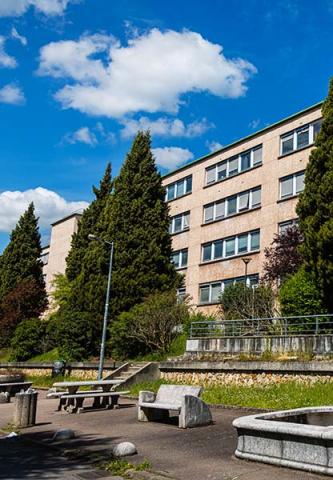
Orsay Bures

Saclay Moulon

Saclay Corbeville