


At the intersection of regional policy, sustainable tourism and environment, the TEI Master’s program offers a 2-year course focusing on the challenges of ecological transition, regional innovation and local development. Multidisciplinary, career-focused and research-based, it prepares for territorial analysis, project management and the evaluation of public policy, and opens the door to roles in expertise, research, consultancy and management within public, private and voluntary sectors.
- Social sciences and humanities program at the intersection of geography, economics, management and environmental sciences
- Duration : 1 year (M2) with 5 months of teaching, 5-6 months of internship/thesis
- Enrolment : 12-20 students (selective)
- Teaching methods : 100% continuous assessment ; teaching by academic lecturers and professionals ; workshops, active and flipped learning, visits ; training in professional software (ArcGIS, Sphinx, databases, digital tools and new technologies)
- The year includes: a common core for the EPI specialisation (methodology and analysis tools, seminars, academic English), specialised courses (quality approaches, sustainable tourism strategies, ecotourism and heritage, tourism economics, evaluation and financing of transition projects, territorial innovation and adaptation, environmental impacts, mediation, facilitation), a choice of optional courses in economics, evaluation techniques, data science, and AI; writing a thesis.
Information
Skills
In line with the specific and cross-disciplinary skills defined in RNCP39043, our TEI Master's graduates are, particularly, capable of:
- Assessing a region and analyzing its tourism and environmental challenges.
- Using quantitative and qualitative analysis tools (surveys, GIS, data analysis, econometrics, indicator creation).
- Design and evaluate projects in sustainable tourism, heritage preservation, and regional development.
- Engage in dialogue with a variety of stakeholders (elected officials, associations, businesses, international institutions).
- Master scientific, professional, and digital communication methods and tools.
More generally, regardless of their master's specialization within the program, students are trained to:
• Think critically about the foundations of economics as a social reality and as an analytical discipline, putting economic discourse into perspective within a multidisciplinary framework (welcoming the reflections of sociologists, historians, geographers, lawyers, and specialists in political science and international relations);
• Describing and analyzing economic and social dynamics by integrating territorial and temporal dimensions, taking into account the interactions between actors, institutions, and political contexts, and using quantitative and qualitative data;
• Take into account the complexity of interactions between economics, politics, and institutions, using theoretical frameworks and methodologies adapted to national and international contexts;
• Develop socio-economic diagnoses and conduct expert assessments to support public and private decision-makers in defining and evaluating development strategies;
• Master and mobilize economic and environmental assessment tools to analyze public and institutional policies, incorporating critical reflection on their assumptions, limitations, and scope;
• Bring together stakeholders and design economic and social projects by integrating multidisciplinary approaches and developing decision-making tools adapted to contemporary issues (territorial development, environmental sustainability, public policy, innovation).
Objectives
- Train experts capable of designing, managing, and evaluating regional projects that integrate tourism, innovation, and sustainability.
- Provide the tools to analyze the economic, social, and environmental impacts of projects.
- Develop a reflective, forward-looking, and creative approach to support regional transitions.
- Prepare students for rapid professional integration, while opening up the possibility of pursuing a PhD
Career Opportunities
Career prospects
Environment / Biodiversity Project Manager
After a Master’s degree: Research analyst
Business Manager
Project officer environment
Project officer sustainable development
Research officer environment
Research officer in sustainable development
Project Manager
Development Manager
Consulting
Evaluation and Forecasting Officer
Project Manager / Researcher in biodiversity and sustainable development
CSR Manager / Officer
cultural development manager
Cultural enhancement manager
cultural communication manager/ community manager
Project manager in the associative sector, local government
Research and Innovation Manager
Project Manager
Validation/qualification Manager
• Chargé·e de communication scientifique, veille technologique ou transfert de technologie
Agricultural services, environment or sustainable development, local authority planning or government services
Engineering firms specialising in environmental impact assessments
Head of a territorial department
Project and territorial development officer
Socio-economic studies and foresight
Management of sustainable development
Project manager in sustainable development and regional/spatial planning
Cultural action and outreach Officer
Head of mission / projects
Design Engineer
Project follow-up and evaluation manager
Coordination of studies in an agency or research institution
Project management support
Head of project/mission
Head of development
Educational project developer
Research officer
Further Study Opportunities
Head of development
Research officer
Head of project/mission
Consultant
Educational project developer
PhD
Interdisciplinary PhD in Sustainability Science (many disciplines possible)
Engineering, research and development
Graduates can be recruited under private or public sector employment contracts, but can also take part in public sector competitive exams and professional examinations.
Students in this track can turn to research at the end of the 2nd year Master's.
Students with a 2nd year Master's degree have the possibility to pursue doctoral research.
Engineering, research and development
Calendar
Admission Route
Capacity
Available Places
Target Audience and Entry Requirements
Direct admission to the M2 TEI program is open to students who have completed an M1 (240 ECTS) or equivalent, in particular:
- Masters 1 in geography, planning, tourism, economics and management, environment, social sciences.
- Equivalent degrees (French or international) in fields related to tourism, sustainable development, land use planning, environmental sciences.
- Students from specialized schools (urban planning, territorial engineering, tourism or environmental science schools) after validation of the required level.
Selection is based on:
- a strong academic record,
- basic knowledge and/or a clear motivation towards careers in sustainable tourism or the promotion and preservation of heritage (particularly natural heritage) or regional development,
- an appetite for environmental and development economics, an interest in ecological and energy transition issues,
- the consistency of the professional project with the objectives of the program.
Application Period(s)
From 01/03/2026 to 25/07/2026
From 24/08/2026 to 05/09/2026
Supporting documents
Compulsory supporting documents
Copy diplomas.
Copy of identity document.
Additional supporting documents
Professional project.
Certificate of French (compulsory for non-French speakers).
| Subjects | ECTS | Semester | Lecture | directed study | practical class | Lecture/directed study | Lecture/practical class | directed study/practical class | distance-learning course | Project | Supervised studies |
|---|---|---|---|---|---|---|---|---|---|---|---|
| Ecotourisme, patrimoines d'eau et de pleine nature | 3 | Annualisé | 24 | ||||||||
| Economie du tourisme | 2 | Annualisé | 18 | ||||||||
| Séminaire de recherche 2 S1 et S2 | 2 | Annualisé | 12 | ||||||||
| Anglais S1 et S2 | 4 | Annualisé | 36 | ||||||||
| Subjects | ECTS | Semester | Lecture | directed study | practical class | Lecture/directed study | Lecture/practical class | directed study/practical class | distance-learning course | Project | Supervised studies |
|---|---|---|---|---|---|---|---|---|---|---|---|
| Innovation territoriale | 2 | Annualisé | 20 | ||||||||
| Management du tourisme durable, démarches qualité et labellisation | 5 | Annualisé | 36 | ||||||||
| Adaptation au changement climatique et analyse d'impacts environnementaux | 4 | Annualisé | 30 | ||||||||
| Médiation, communication et animation territoriale | 2 | Annualisé | 20 | ||||||||
| Ingénierie et pilotage de projets durables | 3 | Annualisé | 24 | ||||||||
| Subjects | ECTS | Semester | Lecture | directed study | practical class | Lecture/directed study | Lecture/practical class | directed study/practical class | distance-learning course | Project | Supervised studies |
|---|---|---|---|---|---|---|---|---|---|---|---|
| SIG et outils numériques | 3 | Annualisé | 30 | ||||||||
| Data Science et IA | 2 | Annualisé | 18 | ||||||||
| Evaluation, projets et programmes (EPI) | 2 | Annualisé | 18 | 0 | |||||||
| Financement de projets, réponse à appels à projets (tourisme, transition écologique) | 2 | Annualisé | 18 | ||||||||
| Evaluation et études d'impact socio-économiques de projets et d'événementiels | 3 | Annualisé | 20 | ||||||||
| Economie de l'environnement 2: l'évaluation des patrimoines naturels et culturels | 2 | Annualisé | 24 | ||||||||
| Series Temporelles, Causalités et Dataming | 3 | Annualisé | 30 | ||||||||
| Econométrie des données complexes : panel, endogénéité et réponses qualitatives | 2 | Annualisé | 24 | ||||||||
| Économie appliquée : cadrage et scénarios macroéconomiques | 2 | Annualisé | 20 | ||||||||
| Subjects | ECTS | Semester | Lecture | directed study | practical class | Lecture/directed study | Lecture/practical class | directed study/practical class | distance-learning course | Project | Supervised studies |
|---|---|---|---|---|---|---|---|---|---|---|---|
| Mise en situation professionnelle (projet encadré) S1 et S2 | 10 | Annualisé | |||||||||
| Mémoire universitaire (recherche ou stage) S4 | 10 | Annualisé | |||||||||
| UE libre S1 ou S2 | 2 | Annualisé | |||||||||
Teaching Location(s)
Training campus
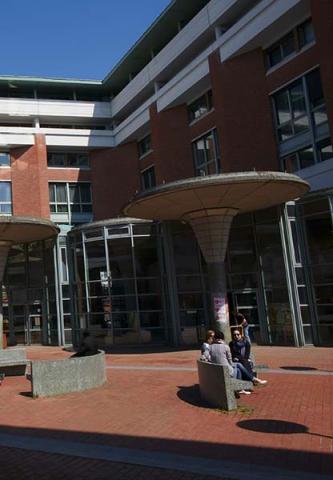
Saint-Quentin-en-Yvelines
Contact
-
Nathalie POTTIER
Responsable Master 1 et 2 Tourisme, Environnement et Innovation territoriale