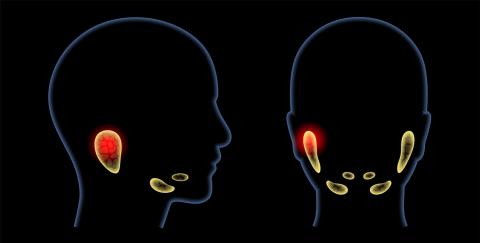
Sjögren’s disease: a new clue to the interferon signature of autoimmune diseases
Scientists from Université Paris-Saclay, Inserm, CEA, AP-HP, the Arthritis Foundation and their international partners have identified a previously unknown mechanism that explains the chronic activation of interferon in Sjögren’s disease, a model of systemic autoimmune disease. These findings provide new insights into the early events underlying the disease and open up new therapeutic perspectives for autoimmune diseases. The results of the study were published on 24 August 2026 by Arco-Hierve et al. in PNAS*, the journal of the American Academy of Sciences.
Sjögren’s disease is an autoimmune disease affecting 0.1% of the general population, nine out of ten of whom are women. It is characterised by an infiltration of immune cells around epithelial tissues, particularly the salivary and lacrimal glands. It causes dry mouth and eyes, joint pain and severe fatigue. In 40% of patients, it is accompanied by often severe inflammatory complications affecting different organs, while 5 to 10% of the most severely affected patients may develop lymphoma (cancer of the lymph nodes) over the course of the disease. To date, no disease-specific treatment has been shown to be effective.
Twenty years ago, the team led by Professor Xavier Mariette, Professor of Universities - Hospital Practitioner (PU-PH) and Head of the Immuno-Rheumatology Department at Bicêtre Hospital, AP-HP, and of the IDMIT joint research unit (Immunological Diseases, Microbiology and Innovative Therapies – Université Paris-Saclay/Inserm/CEA), had already shown in the same journal of the American Academy of Sciences (Gottenberg JE et al., PNAS 2006) that Sjögren’s disease, like other systemic autoimmune diseases, is characterised by a strong interferon signature. This refers to the persistent activation of hundreds of genes normally involved in fighting viral infections. This antiviral response is considered one of the major drivers of the disease and is now an important therapeutic target. This explains why, for nearly 50 years, scientists have been searching unsuccessfully for a viral cause of the disease.
Thus, one fundamental question remained unanswered: why does this antiviral response remain activated when no persistent viral infection can be detected in the majority of patients?
Several hypotheses have been put forward in recent years, including previous viral infections, the activation of viral-derived sequences present in our own genome, and genetic abnormalities affecting the immune system. However, none of these hypotheses fully explains the origin of this chronic interferon activation in the cells of the salivary glands.
The target cells of the disease trigger their own antiviral alarm
The team led by Professor Xavier Mariette has now shown that the salivary gland epithelial cells of patients with Sjögren’s disease have a previously unknown defect in a surveillance system responsible for eliminating certain RNA molecules naturally produced by mitochondria, the organelles responsible for producing energy within cells.
When this system functions normally, these RNA molecules are rapidly degraded and remain invisible to the immune system. However, when this surveillance mechanism fails, these RNA molecules accumulate in the form of double-stranded RNA, a structure normally associated with viral infections. The cells then interpret this signal as evidence of a virus and spontaneously activate an interferon response, even though no infectious agent is present. They thus become the source of chronic inflammation themselves.
A new molecular mechanism identified
The study, coordinated by Dr Rami Bechara, Associate Professor–Hospital Practitioner (MCU-PH) at IDMIT (Université Paris-Saclay/Inserm/CEA), shows that this protective system relies on an epitranscriptomic mechanism, a form of chemical regulation of RNA that controls the fate of messenger RNA.
The researchers show that the enzyme METTL3 stabilises the messenger RNA of REXO2, a mitochondrial enzyme essential for eliminating these potentially immunostimulatory RNA molecules. When METTL3 activity decreases, REXO2 expression drops. Mitochondrial RNA molecules accumulate, escape degradation and activate several innate immune sensors, triggering excessive production of interferons and inflammatory mediators.
A discovery confirmed in patients
To demonstrate the clinical relevance of this mechanism, the researchers combined complementary approaches: human cell cultures, transcriptomic analyses, spontaneous mouse models of the disease, and salivary gland biopsies from patients treated in the Immuno-Rheumatology Department at Bicêtre Hospital, AP-HP. Across all these models, they observed reduced levels of REXO2 in patient cells, associated with an increased interferon signature. These findings show that this mechanism is not only observed in the laboratory but is also present in patients with Sjögren’s disease.
A new way of understanding the disease
These findings therefore offer a new way of understanding the origin of the interferon signature in Sjögren’s disease: it could be triggered from within the cells themselves, as a result of defective clearance of their own mitochondrial RNA, rather than by the persistence of a virus.
This mechanism could also contribute to the chronic interferon activation observed in other autoimmune diseases, such as systemic lupus erythematosus.
New therapeutic perspectives
Treatments currently in development mainly target the consequences of interferon activation. By identifying a mechanism upstream of this inflammatory response, this study paves the way for new strategies aimed at restoring mitochondrial RNA surveillance or preserving the functioning of the METTL3–REXO2 pathway to prevent pathological interferon activation (patent FR2516038).
“For years, the origin of the interferon signature observed in many autoimmune diseases, and in Sjögren’s disease in particular, has remained one of the major unanswered questions in understanding the origins of autoimmune diseases. Our work shows that, in the absence of any infection, epithelial cells can themselves produce the signals that trigger this antiviral response. This discovery reveals a fundamental mechanism underlying the disease and opens up new avenues for developing treatments that target the early causes of inflammation rather than merely its consequences,” explains Professor Xavier Mariette.