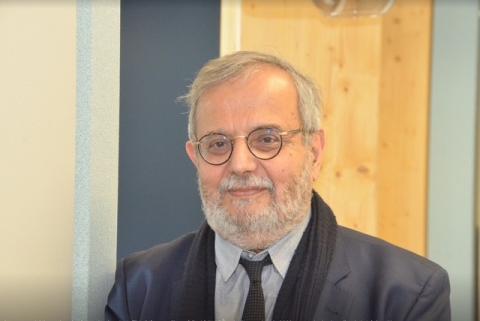
Joël Ankri: a research physician specialising in ageing and Alzheimer's disease
Joël Ankri has devoted his career to understanding the mechanisms of ageing and the associated cognitive diseases. A professor emeritus, he is the former director of the Ageing and Chronic Diseases Laboratory (Vima - Univ. Paris-Saclay/UVSQ/Inserm). He is a hospital practitioner and Alzheimer's disease specialist at the Sainte Périne Hospital in Paris. Since 2021, he has chaired the Scientific Council of the French National Agency for Medicines and Health Products Safety (ANSM) and is also medical advisor to the Director General of the Île-de-France Regional Health Agency (ARS). In July 2025, he was appointed Knight of the Legion of Honour.
Joël Ankri began studying medicine at Pierre and Marie Curie University (now Sorbonne University) in 1969, at a time when modern biology was in its infancy. In 1978, he defended a thesis in endocrinology on congenital adrenal hyperplasia, a rare genetic disorder that disrupts hormone production. He was awarded a medal from the Faculty of Medicine for his work. After completing his military service at the National Institution for Disabled Veterans, he turned his attention to geriatrics and public health. He obtained a postgraduate diploma (DEA, equivalent to a Master's degree today) in rehabilitation, re-education and motor function plasticity at the University of Burgundy, then defended a thesis in public health and geriatrics, focusing on medication use in the elderly.
Alzheimer's disease, from ‘normal ageing’ to brain pathology
First described in 1906, Alzheimer's disease remains one of the most complex pathologies of cerebral ageing. This disease was long ignored and attracted only marginal interest until the ageing of populations led to intensified research.
When Joël Ankri began his university hospital career in the 1980s at the Sainte-Périne Hospital in Paris and at the Ageing and Chronic Diseases Laboratory (Vima - Univ. Paris-Saclay/UVSQ/Inserm), gerontology was still a relatively unexplored field. Cognitive disorders in old age were often confused with senility. "Then, over time, we came to understand that certain changes in the brain were not part of normal ageing, but actual pathologies. " Alzheimer's disease is now identified by the presence of two abnormal proteins, beta-amyloid and Tau protein, which accumulate in certain areas of the brain, particularly the hippocampus, leading to progressive degeneration of cognitive functions. "We now have very accurate diagnostic tools, such as brain imaging and biological biomarkers. "
Alzheimer's disease currently affects more than one million people in France and remains predominantly present in developed countries. However, it is also on the rise in emerging countries, particularly in Africa, where traditional family solidarity is showing its limits, and in China, which is mobilising significant resources for research and care for the elderly.
A professor serving the healthcare system
At Sainte-Périne Hospital, Joël Ankri created one of the first multidisciplinary memory clinics, a specialised facility designed to assess, diagnose and monitor cognitive disorders. At the same time, he conducted epidemiological research on the elderly, focusing on medication use, care coordination and quality of life. "We saw how fragmented our healthcare system was, because those involved in funding, care and assessment still too often work in silos." Together with colleagues from Quebec and Denmark, the researcher compared care models and advocated for an integrated approach combining medical and social care.
His research then broadened to include frailty, quality of life and the health of family carers, as well as the evaluation of elderly care policies, through several cohorts and national and European projects. In this context, he was involved in the international RAI (Resident Assessment Instrument) project, coordinated by North American researchers, which aimed to harmonise the tools used to assess ageing and dependency in different countries by standardising the practices of medical and social institutions (nursing homes, long-term care facilities, etc.) and improving the international comparability of data on dependency and public health policies.
Finally, his work on the consumption of psychotropic drugs among seniors revealed a significant public health issue, namely frequent overprescription and a high iatrogenic risk (i.e. an unexpected and undesirable effect of a drug), linked to the body's increased sensitivity to ageing. "A drug that causes simple drowsiness in a forty-year-old can cause a fall, a fracture and serious consequences in an octogenarian.
National and international responsibilities
In 2012, Joël Ankri evaluated the national Alzheimer's plan launched in 2008 under the presidency of Nicolas Sarkozy, before participating in the design of the 2014 Neurodegenerative Diseases Plan. He was appointed by the Ministries of Health, Senior Citizens and Higher Education to evaluate the implementation of these programmes and help define their priorities, namely structuring memory consultations, strengthening research and improving care for patients and their families. " This was the first time that the State had recognised the scale of these diseases and made them a real public health issue, with an investment of €1.6 billion over five years. The international community praised France for being the first country to declare this a national public health issue. "
In 2010, Joël Ankri took over as head of the university's Health, Environment and Ageing Laboratory, which he transformed in 2015 into a joint research unit, the Vima Laboratory. The unit, rated excellent by the High Council for Evaluation of Research and Higher Education (Hcéres), explores the epidemiological dimensions of ageing, frailty and chronic diseases. In the same year, Joël Ankri created the Master's degree in Public Health Intervention Methodology at Université Paris-Saclay and was appointed Deputy Director of the university's Public Health Doctoral School.
As a recognised expert in medicines and pharmacovigilance, Joël Ankri also sat on several French and European bodies, including the National Pharmacovigilance Commission (2000-2009), the Marketing Authorisation Committee (2004-2009) and the Geriatric Group of the European Medicines Agency (2009-2015).
Although retired since 2019, Joël Ankri remains involved in public policy as a scientific advisor to the National Health Insurance Fund, the Île-de-France Regional Health Agency, and, since 2021, as chair of the ANSM Scientific Council. He was made a Knight of the Academic Palms in 2021 and a Knight of the Legion of Honour in 2025. These awards recognise his commitment to healthcare, research and teaching over nearly half a century.
Promising but still incomplete advances
In light of recent advances in the treatment of Alzheimer's disease, Joël Ankri is cautiously optimistic. The monoclonal antibodies authorised in the United States, Japan and Europe represent a step forward but not a real solution. These drugs, which eliminate beta-amyloid plaques from the brain, show spectacular results in imaging but no major clinical improvement. "This shows that we do not yet have a complete understanding of this disease." Joël Ankri advocates for cross-disciplinary research combining biology, clinical science and the humanities to accelerate discoveries, and stresses the need to attract top-level researchers. "A country that does not invest in research compromises its future, and the best job in the world is research and teaching."