Franck Montmessin is awarded the 2024 David Bates medal
The 2024 David Bates Medal has been awarded to Franck Montmessin for his major contributions to understanding the water cycle on Mars and his innovative instrumental development work.
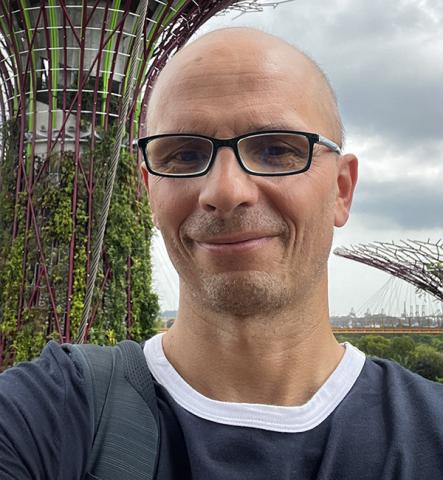
Franck Montmessin is a CNRS research director at the Atmospheres and Space Observations Laboratory (LATMOS – Univ. Paris-Saclay/CNRS/IPSL/UVSQ/Sorbonne Université). He has been awarded the David Bates medal by the European Geosciences Union (EGU) for his groundbreaking contributions to our understanding of the water cycle on Mars, shedding light on the climate and geological history of the Red Planet.
In addition to his modelling and observational research, Franck Montmessin has played a central role in instrumental development for space missions. Notably, as the Principal Investigator of the SPICAM (SPectroscopy for the Investigation of the Characteristics of the Atmosphere of Mars) instrument onboard Mars Express, his leadership has led to groundbreaking discoveries, such as the detection of carbon dioxide clouds in Mars’ mesosphere. His work on instruments like the Atmospheric Chemistry Suite (ACS) onboard the ExoMars Trace Gas Orbiter has provided unique data on the Martian atmosphere, including methane levels and the presence of chlorine compounds.
Franck Montmessin’s expertise has extended beyond Mars, encompassing contributions to other planets, such as Venus and Earth. His contributions have expanded the horizons of planetary science, paving the way for future discoveries.
The David Bates medal was established by the Planetary & Solar System Sciences Division in recognition of the scientific and editorial achievements of Sir David Robert Bates, FRS. It is awarded to scientists for their exceptional contributions to planetary and solar system sciences.
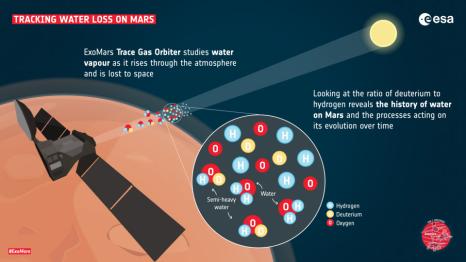
ESA - ExoMars observing water in the martian atmosphere