Cécile Denis: understanding and treating von Willebrand disease, a century after its first description
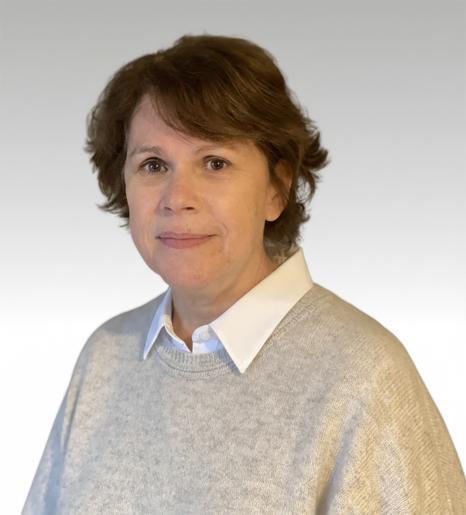
Cécile Denis is Director of the Haemostasis, Inflammation and Thrombosis Unit (HITh – Université Paris-Saclay/Inserm), based at Bicêtre Hospital. She is a specialist in von Willebrand disease, which is a genetic disorder of blood clotting. She is dedicated to understanding how it develops, identifying its various forms and developing new treatments.
At first glance, Cécile Denis comes across as a reserved woman, somewhat shy about mentioning the honours and awards she has received throughout her career, such as the very recent Jean-Paul Binet Prize from the Foundation for Medical Research. But as soon as you ask her questions about her research, her face lights up, her eyes sparkle, and she becomes a fountain of knowledge.
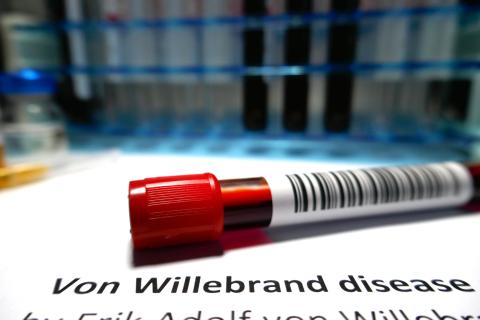
She devotes her work to von Willebrand disease, named after the Finnish doctor who first described the condition in 1926. The symptoms include "regular nosebleeds, very heavy and painful periods, and bruising," notes Cécile Denis, referring to the most common cases, with the most severely affected patients experiencing haemorrhages and even death. This bleeding disorder has long been mistakenly interpreted as a form of haemophilia. It has a genetic origin and is linked to abnormalities in the quantity or quality of von Willebrand factor, whereas haemophilia is linked to abnormalities in factor VIII. Von Willebrand factor is a circulating protein that plays a crucial role in bleeding by initiating clot formation and stopping blood flow. Affected individuals do not produce enough of this factor, or produce it in an inadequate form, and are therefore particularly prone to heavy, uncontrollable bleeding. The severity varies depending on the patient’s genetic profile. Treatments exist to increase the amount of functional von Willebrand factor in the bloodstream. They target the symptoms and are indicated in cases of trauma or surgery. However, they do not address the genetic cause, offer only temporary protection and carry a risk of infection when derived from donated blood plasma.
A relatively common but still little-known condition
Although exact figures are difficult to obtain, it is estimated that this disease affects around one in 10,000 births, a rate similar to that of haemophilia. However, it is far less well known than haemophilia, both among the general public and healthcare professionals, which leads to delays or misdiagnoses. “Many people are carriers without realising it,” agrees Cécile Denis. There are several possible explanations for this lack of awareness of von Willebrand disease, or indeed its confusion with haemophilia. Firstly, haemophilia is more often symptomatic and is therefore subject to greater scrutiny. Secondly, Queen Victoria of the United Kingdom, who carried a defective gene for haemophilia, passed the condition on to her descendants in the 19th century, including European royalty. This disease has thus received significant attention and associated research funding. Finally, the genes responsible for haemophilia are located on the X chromosome. Women, who have two of these, are protected from the most severe forms, but men are not: if their single X chromosome is mutated, they have haemophilia.
Conversely, von Willebrand factor is encoded by a gene located on chromosome 12. A mutation in this gene therefore affects all individuals in a similar way. However, the effects are far more severe and disabling in women, due to menstruation. The disease was discovered through the example of a Finnish family in which all the young girls died from haemorrhaging during their first period. Cécile Denis points out that in a medical field designed by and for men, this disease, which affects them only to a lesser extent, did not attract their attention. That is why, for over 30 years, the researcher has been working to provide these patients with new treatment options and to raise awareness of their condition, in partnership with patient organisations.
A career of women's excellence
This commitment to women and their health may also be inspired by Cécile Denis’ own career path. Almost by coincidence, all her mentors have been female researchers. After completing a bachelor’s and master’s degree in biology in Rennes, Cécile Denis continued her studies in Paris and met Dominique Baruch at Inserm, a specialist in coagulation. This collaboration sparked her interest in the subject, and she went on to complete a PhD thesis on the mechanisms of action of von Willebrand factor, which she defended in 1993 under the supervision of Dominique Meyer. This opened her doors to Harvard Medical School, where she worked for seven years in Denisa Wagner’s laboratory. In 2000, she decided to return to France and set up her own team with support from the Avenir programme designed by Inserm. Today, Cécile Denis is the director of her own laboratory.
“It’s almost like a small business,” she says, referring to her team of around forty members. In addition to her research activities, she manages relations with the HITh unit’s supervisory bodies, handles administrative duties and seeks funding from public or private partners. Whilst these tasks are certainly a step away from the role of a researcher, they help to foster exciting projects that bring scientific work to the fore.
The many roles of a researcher
For example, one such project concerns a potential new treatment for von Willebrand disease, using cutting-edge technology known as “bispecific nanobodies”. These are small, innovative proteins that bind to both von Willebrand factor and the albumin molecule. Albumin is present in large quantities in the body and undergoes a “recycling” process. Thanks to the nanobodies, the von Willebrand factor that is captured is recycled rather than being eliminated as it normally would be. Its concentration in the blood therefore increases, providing a simple and elegant solution for patients! This research has been the subject of a patent application, and Cécile Denis is in discussions with potential pharmaceutical partners to continue its development.
Another of her responsibilities concerns the application of health and safety regulations. She recalls her early experiments in the late 1980s, working with blood products potentially contaminated with HIV, without any special protection. “Unthinkable today!” Staff protection and adherence to ethical procedures, particularly regarding animals used for scientific purposes, have become standard practice, enforced through training and vigilance.
But when asked what she is most proud of, Cécile Denis does not mention a scientific publication, a patent or the Legion of Honour she received in 2012. She speaks of the students she has supervised during their PhDs, who are now established researchers, either in her own laboratory or abroad. Grateful to her own former supervisors, she is committed to continuing this virtuous cycle and to “giving a little of the same back to young women and boosting their self-confidence” so they can build a career in science.
After three decades dedicated to ethical and useful research, Cécile Denis’ motivations remain unchanged: the excitement of discovery, the intellectual pleasure of formulating hypotheses, a sense of wonder at the idea of being the first person to observe or understand a phenomenon, and passing on these values to new generations of researchers.