Máni: a mission to map the Moon with unprecedented precision selected by the ESA
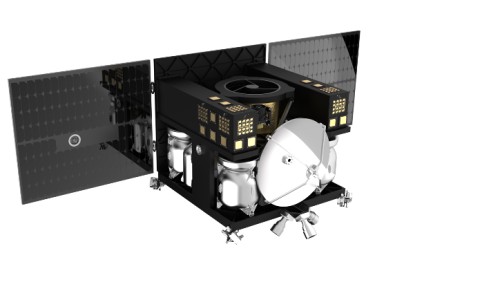
The Máni mission, named after the Moon goddess in Norse mythology, will explore the Moon with unprecedented observational resolution. It is led by a Danish and international consortium (Poland, Slovenia, the Netherlands, and France), with launch and the start of scientific operations planned for 2029. A team from Geops (Université Paris-Saclay/CNRS) is involved, responsible for developing the data-processing software and contributing to the selection of areas of interest on the Moon.
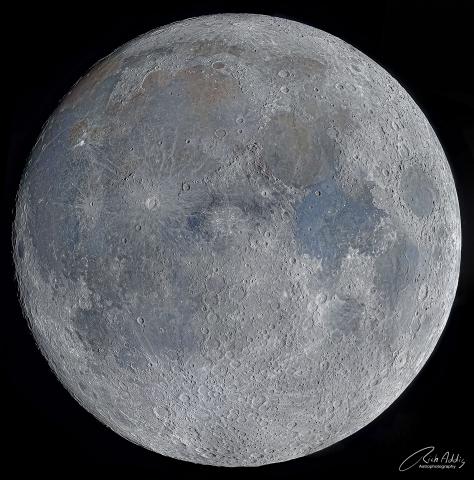
On Tuesday, 16 December 2025, the ESA announced the selection of Máni, a new space mission dedicated to observing the Moon. Máni is a satellite that will map the lunar surface using high-resolution imagery and create detailed 3D maps of the Moon’s terrain. These data will be essential for ensuring safe landings, as well as for the navigation of astronauts and lunar rovers during potential future missions to the Moon.
For the first time from lunar orbit, images will be acquired at a 20 cm resolution. Another major innovation of the mission is its ability to observe the Moon from multiple geometries, allowing it to scrutinise our satellite in unprecedented detail. Máni will provide valuable new information to support the planning of both human and robotic exploration of the Moon, reduce landing-related risks, and facilitate scientific investigation.
Through photometric analyses, sub-pixel information will be produced to determine surface properties at the micrometre scale. Due to the probabilistic nature of the new data processing methods employed, all mission data products will be accompanied by a confidence measure. This means that future missions will be able to select, for example, landing sites that not only meet mission requirements but also have a high level of confidence in compliance, thereby reducing risks and increasing the likelihood of mission success.
3D maps of the Moon with unprecedented precision
The Máni mission will also be the first to use a targeted multi-angular photoclinometric mapping approach to chart the Moon’s key regions of interest. Its goal is to acquire orbital images of the lunar surface, including the polar regions, at the highest possible resolution across a wide range of observation geometries. From these images, Máni will produce detailed maps of topography and reflectance properties at a resolution comparable to that of the images themselves. The data on how light is reflected from lunar areas will be used to study the Moon’s microphysical characteristics, such as roughness, porosity, and texture. This knowledge will also help to better calibrate Earth-based space instruments that use the Moon as a calibration target, improving our understanding of Earth’s climate evolution.
The Máni mission is the result of an international scientific consortium led by the University of Copenhagen, bringing together Danish and international research institutes as well as industrial partners. The Danish company Space Inventor is the main industrial partner of the mission. It will build the satellite and install the instruments and components provided by the mission’s industrial partners from Poland, the Netherlands, and Slovenia. Academic partners include Aalborg University, Aarhus University, the University of Southern Denmark, the Danish Meteorological Institute (DMI), and the Polish Academy of Sciences (Polska Akademia Nauk).
Université Paris-Saclay is participating in the mission by contributing the general planetary science expertise of its researchers at the Geosciences Paris-Saclay laboratory (GEOPS - Univ. Paris-Saclay / CNRS), as well as their technical expertise in studying planetary surfaces using photometry and photoclinometry methods. In particular, they will be responsible for developing the data-processing software and participating in the selection of areas of interest on the Moon.
Notes
1 : including NASA’s Artemis III mission, which will return astronauts to the lunar surface near the Moon’s South Pole.