Fanny Jaulin: from cellular architecture to the bedside of patients
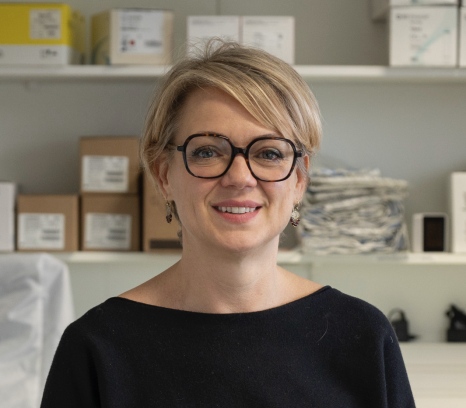
Fanny Jaulin is a cell biologist, an Inserm research director and head of the Collective invasion team within the Tumour Cell Dynamics unit (TCD – Univ. Paris-Saclay/Gustave Roussy/Inserm). A specialist in epithelial biology and tumour dissemination, she focuses on the mechanisms of cancer cell migration to develop new therapeutic approaches. She is convinced of the need to bridge the gap between the laboratory and the operating theatre, and places patients at the heart of her approach to precision medicine.
Nothing initially suggested that Fanny Jaulin was destined to head a cutting-edge oncology research laboratory. As a young science student, she envisaged a career in journalism, driven by a desire to explain, interpret and share knowledge. It was during an early internship at the Pasteur Institute that the light bulb moment came for her. “During that internship, I discovered the world of laboratory benches and the excitement of experimentation, and I literally fell ‘in love’ with research and the exploration of living organisms,” explains the researcher. From then on, she undertook numerous voluntary placements throughout her university studies to refine her understanding of biological mechanisms. Although she was initially interested in immunology, her choice of second-year master's degree led her to Marseille, where she made a decisive scientific encounter. This turning point marked the beginning of her passion for the epithelial cell — that fundamental unit whose dysfunction is responsible for 85% of cancers — which became the central theme of her career.
Marseille and the birth of a pioneering vocation
It was in Marseille that Fanny Jaulin laid the first bricks of her scientific edifice. There, she joined Jean-Paul Borg’s fledgling laboratory, where she had the privilege of being the very first student. “In this environment where everything had to be built from scratch – a constant I have sought throughout my career – I immersed myself in the study of the networks of molecular interactions regulating the polarisation of epithelial cells,” she recalls. Her thesis, defended in 2004, played an active role in the emergence of a new field of cell biology: understanding how a cell’s acquisition of structure and polarity is intimately linked to the mechanisms of tumourigenesis.
The New York challenge: from cutting-edge imaging to 3D models
Keen to further develop her technical skills, particularly in cutting-edge imaging, she then moved to New York for her first postdoctoral fellowship at Cornell Medical College under Jerry Kreitzer. “There, I learnt high-precision microscopy, observing how epithelial cells acquire their function,” she explains. She then went on to a second postdoctoral fellowship at Memorial Sloan Kettering Cancer Center in Alan Hall’s team. It was during these years in the US that she began to question traditional culture models. “I then realised that two-dimensional (2D) cell cultures were not representative of living organisms; so I began to develop three-dimensional (3D) models, such as cysts, to get closer to the pathological reality of cancer,” she says. From that moment on, her ambition was clear: to set up her own laboratory to explore the disease in a relevant pathophysiological context, generating data capable of transforming our understanding of cancer.
The Gustave Roussy adventure: breaking the dogma of metastasis
In 2012, thanks to the prestigious ATIP-Avenir programme established by Inserm and the CNRS, Fanny Jaulin returned to France to set up her team at Gustave Roussy in Villejuif. She then took a risky and pioneering gamble: abandoning immortalised cell lines and conventional mouse models to work directly on fresh tumour tissue, taken from the operating theatre or the pathology department. “Although we encountered significant technical difficulties at the outset – what was supposed to be ‘easy’ wasn’t working – our efforts eventually paid off.” Paradoxically, it is her most ambitious programme, the one based on close collaboration with surgeons, that unfolded most smoothly. “By collecting samples from cohorts of hundreds of patients, we have managed to demonstrate that tumour cells do not migrate in isolation, but preferentially move in groups to colonise the body.” This major discovery regarding dissemination – the true cause of mortality in cancer, as opposed to mere local proliferation – cemented her international standing.
Recognition from her peers reached its peak in 2025 when she received the Academy of Medicine Award, a distinction that recognised the significance of the fragile yet essential "bridge" she had managed to build between fundamental laboratory research and clinical practice.
Functional oncology: organoids in the service of medical decision-making
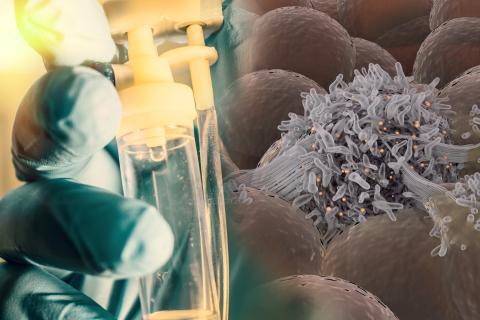
Today, Fanny Jaulin’s research revolves around an innovative concept of which she is one of the leading figures: functional oncology. For her, whilst genomic analysis is valuable, it does not always enable the identification of an effective drug for every patient. Her laboratory therefore uses organoids – veritable “mini-tumours” from patients recreated ex vivo within a few weeks – to test the efficacy of a range of treatments in real time. “The idea is no longer simply to understand why a drug might work, but to observe directly what works on the patient’s own cells,” explains the researcher. Under her leadership, large-scale clinical trials have been launched at Gustave Roussy. Following an observational trial that validated the predictive value of these organoids, her team, Collective invasion of the Tumour Cell Dynamics unit (TCD – Univ. Paris-Saclay/Gustave Roussy/Inserm), is leading the Organotreat interventional trial, in which patients who have reached a therapeutic impasse are treated based on the results obtained from their biological avatars in the laboratory.
Researcher-entrepreneur: a new figure driving societal impact
Fanny Jaulin’s career reached a new strategic milestone in 2022 when she secured funding from RHU Organomics, a €10 million consortium bringing together industrial and academic partners. By securing this project, she realised that the industrial sector is essential to ensure that laboratory innovations do not remain confined to the lab but have a large-scale impact on society. Thus, in 2023, she founded the start-up Orakl Oncology, taking on the role of CEO. She now embodies this new profile of a “researcher-entrepreneur” capable of navigating between the rigour of public research and the agility of the business world. “For me, the company is truly an essential lever, not only for accelerating patients’ access to diagnostic tests, but also for generating resources capable of refinancing academic research.”
Building for the future: an integrated approach to fighting cancer
Beyond her scientific and entrepreneurial successes, Fanny Jaulin continues to lead her team with the same pioneering spirit she had from the very beginning, constantly exploring new questions about the mechanics of cell clusters and their ability to escape from their tissue of origin. Through her dual roles as lab head and CEO, she is building an ecosystem where dialogue between doctors, researchers and industry is ongoing. “In my view, science is like a brick that we add to a wall of knowledge which must serve as a bulwark against disease.” By placing the patient at the centre of every experiment, she is redefining the boundaries of modern cell biology. Her commitment to sharing knowledge — which was already evident in her interest in journalism — is now reflected in her active presence in the media and at conferences, where she promotes bold, interdisciplinary research that is resolutely focused on clinical impact.