ERC Proof of Concept 2025: four laureates linked to Université Paris-Saclay
On Tuesday 30 June 2026, the European Research Council (ERC) published the results of the first round of its Proof of Concept grant programme. Among the 182 projects selected, four are led by scientists from the Université Paris-Saclay community. The recipients of ERC Proof of Concept grants will receive a lump-sum grant of €150,000, which “can be used, for example, to explore commercial opportunities, prepare patent applications or assess the practical viability of scientific concepts”.
Discover the successful projects:
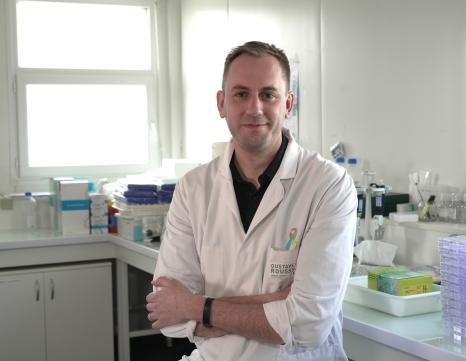
Alexandre Detappe, head of the Nanomedicine team at Gustave Roussy, affiliated with the Molecular Radiotherapy and Therapeutic Innovation Laboratory (Ramo-IT – Université Paris-Saclay/Gustave Roussy/Inserm), holder of the Gustave Roussy Foundation’s Excellence Chair in Nanotherapy since 2025, and also head of the Nanomedicine Laboratory at the Strauss Institute, will receive an ERC Proof of Concept grant for his project Nano-BITE, Multispecific theranostic nano-engager platform.
Immunotherapy has profoundly transformed the treatment of many cancers by harnessing the immune system’s defences against tumour cells. Despite these advances, its effectiveness remains limited in many solid tumours, as two major challenges persist. First, it is often difficult to recruit sufficient immune cells to the tumour site. Second, these cells struggle to remain active over time within a particularly hostile tumour microenvironment. These limitations reduce treatment efficacy and may require repeated administrations, increasing the risk of side effects.
To address these challenges, the Nano-BITE project is developing nanoparticles capable of acting directly within the tumour microenvironment. The aim is to promote interactions between immune cells and cancer cells while sustaining a durable anti-tumour response. This approach could make it possible to concentrate therapeutic action within the tumour and limit effects on healthy tissues.
Over the next 18 months, the research funded by the ERC will enable the first preclinical validation studies of this technology and prepare the next stages of its development. Ultimately, this strategy could pave the way for new treatments for patients with solid tumours, drawing in particular on the expertise of Gustave Roussy’s Department of Therapeutic Innovation and Early Trials (DITEP).
Emmanuel Flurin, CEA researcher within the Quantronics team of the Condensed Matter Physics Department (SPEC – Université Paris-Saclay/CEA/CNRS), and a specialist in quantum physics, will receive an ERC Proof of Concept grant for his project SuperQuSense, SUPERconducting circuits for QUantum SENSing of microwave radiations.
SUPERQuSENSE is part of the field of quantum technologies, which use the laws of quantum mechanics to push back the limits of measurement. The project is based on a simple idea: converting extremely weak analogue signals into discrete events, in a way comparable to a quantum analogue-to-digital converter. This approach makes it possible to overcome the fundamental background noise caused by vacuum fluctuations, which currently limits measurement technologies.
As part of his ERC Starting Grant INGENIOUS, Emmanuel Flurin and his team developed a new detector based on this principle. It is capable of measuring microwave signals, comparable in frequency to those used in Wi-Fi or 5G technologies, but with infinitely lower intensities. This new detection method improves power sensitivity by several orders of magnitude compared with the most advanced technologies currently available. It is already opening up new possibilities in fields such as magnetic resonance, quantum computing and cosmology, particularly in the search for dark matter.
The objective of the ERC Proof of Concept SUPERQuSENSE project is to transfer this technology from the laboratory towards a future deep-tech start-up, ensuring its valorisation and making it available to scientific and industrial communities.
Julie Grollier, CNRS Research Director at the Albert Fert Laboratory (LAF – Université Paris-Saclay/CNRS/Thales), and an internationally recognised physicist for her work in spintronics and neuromorphic computing, who was also awarded the 2026 Marius Lavet Prize, will receive an ERC Proof of Concept grant for her project RF-ImagingNet, Spintronic RF Neural Front-Ends for Embedded Microwave Sensing.
Further information to follow.
Christophe Laux, Professor at CentraleSupélec, head of the Non-equilibrium Plasmas research team at the Molecular and Macroscopic Energy, Combustion Laboratory (EM2C – Université Paris-Saclay/CentraleSupélec/CNRS), Director of CentraleSupélec’s Department of Engineering Leadership and Careers, and co-director of the Université Paris-Saclay Master’s degree in Energy, will receive an ERC Proof of Concept grant for his project POWERPAC, Demonstration of plasma-assisted combustion for conditions representative of high power staged aircraft engines.
Further information to follow.