Bertrand Thirion: mapping the human brain using artificial intelligence
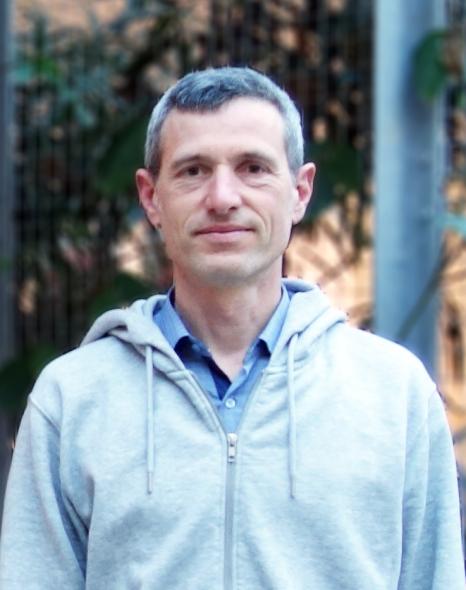
Bertrand Thirion is a research director at the Inria Centre of Université Paris-Saclay and a member of the Mind project team, run jointly with the NeuroSpin centre of CEA Paris-Saclay. He has also been a member of the French Academy of Sciences since January 2026. His expertise, at the intersection of computer science, applied mathematics and neuroscience, focuses on modelling brain function through imaging, with potential applications in understanding and diagnosing neurodegenerative diseases.
After graduating from the École Polytechnique in 1998, Bertrand Thirion continued his studies at Télécom Paris for two years, whilst also obtaining a Master’s degree in Mathematics, Vision and Learning (MVA) from the ENS Paris-Saclay. He specialised in image processing applied to neuroscience under the supervision of Olivier Faugeras, a researcher at the Inria Sophia Antipolis centre and a pioneer in computer vision, who supervised his PhD from 2000 to 2003. Attracted by the imminent establishment of the CEA Paris-Saclay’s NeuroSpin centre, Bertrand Thirion returned to the Île-de-France region to undertake a postdoctoral fellowship from 2003 to 2005. There, he contributed to the emergence of the concept of "decoding" brain activity, in collaboration with the neuroscientist Stanislas Dehaene.
From Parietal to Mind
“To measure brain activity, we analyse functional brain images obtained using functional magnetic resonance imaging (fMRI),” explains the researcher. “The initial experiments, carried out at the Frédéric Joliot Hospital in Orsay, demonstrated that it was possible to partially reconstruct the individual’s visual stimulus.” In 2005, Gilles Kahn, CEO of Inria, tasked Bertrand Thirion with setting up a CEA–Inria research team dedicated to brain modelling: Parietal was officially established in 2009, and Bertrand Thirion led it until 2021, when Mind took over. The team currently comprises around forty people, including five permanent staff. Also involved in the development of Université Paris-Saclay, Bertrand Thirion headed the DataIA Paris-Saclay Institute from 2018 to 2021 and contributed to the establishment of the university’s Graduate School of Computer Science (ISN).
The Scikit-learn tool
Faced with the massive volume of data generated by MRI scans, the Mind team quickly realised that their analytical needs required high-performance machine learning tools. In collaboration with his colleague Gaël Varoquaux, the researcher developed Scikit-learn, an open-source software programme funded by public and private institutions. “Scikit-learn has become an indispensable tool in artificial intelligence, suitable for any predictive data analysis problem. It is now widely used by the international scientific community, with billions of downloads to its name,” says Bertrand Thirion. Whilst the subsequent advent of deep learning has brought new technological solutions, Scikit-learn remains a global benchmark that continues to be developed through a start-up, Probabl, founded in 2025.
The advent of AI
Bertrand Thirion has recently turned his attention to language, “the gateway to cognition, encompassing the mechanisms of understanding and representing the world”. The method relies on the synchronous linking of two data streams: on the one hand, brain images captured via MRI every 500 milliseconds over sequences lasting around fifteen minutes; on the other hand, linguistic data. “We have the exact transcript of the audio stream from the podcast that the person is listening to during the scan. Each sentence heard, time-stamped, is converted by an AI model into a vector representation.”
The decoding system is thus able to reconstruct, in chronological order, the sentences heard by the individual whose brain is being scanned. The texts provide the semantic context essential for resolving syntactic ambiguities – such as pronoun references – and modelling the precise meaning of the utterance. The system is based on a machine learning model. “It is trained on nine acquisition sessions, then evaluated during a tenth, previously unseen session. During this test phase, the model receives only brain activity data as input. It must then generate a prediction of the vector representation of the language in an attempt to reconstruct the sentences originally heard, which allows us to quantify the discrepancy between the decoded text and the reality of the experience.” Whilst the initial deployment of this model focuses on the French language, the researcher aims to adapt it one day to other linguistic systems.
Mapping the brain
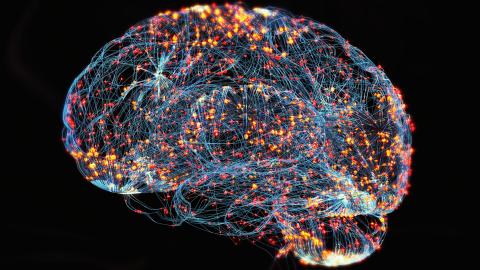
The interest in language decoding stems from its intrinsic link not only to cognition, but also to the emotional sphere and social cognition. Bertrand Thirion is currently publishing the results of a project carried out between 2013 and 2023 at NeuroSpin, the aim of which is to establish a comprehensive functional map of the adult brain. “Our approach has been to study a small number of individuals, but to scan them extensively under a variety of experimental conditions.”
In particular, this research highlights the properties of brain connectivity – that is, the cohesion of networks between different regions of the brain. “This connectivity constitutes a genuine ‘fingerprint’ that remains stable over time for a given individual,” explains Bertrand Thirion. “We have thus observed very different brain profiles: some are highly specialised in abstraction and logic, such as those of mathematicians, whilst others are more language-oriented. ”
This “fingerprint” of the brain also turns out to be specific to the cognitive task at hand. When watching a film, analysing connectivity helps to precisely identify the sequences being viewed (action scenes, scenes of stress or scenes evoking empathy towards the characters). “Extracting these dimensions enables us to envisage the creation of comprehensive biomarkers of neurocognitive and emotional state. This paves the way for clinical applications, such as the early diagnosis of neurodegenerative diseases based on functional alterations detectable well before the appearance of late-stage anatomical markers.” In psychiatry, these tools could also be used to objectively assess conditions such as hallucinations or emotional dysregulation. “Our hypothesis is that training a ‘foundation model’ designed to extract linguistic information actually captures an informative signal about the patient’s overall state.”
Karavella.ai: pushing the boundaries of brain decoding
Elected to the Academy of Sciences in early 2026, Bertrand Thirion sees this election first and foremost as recognition of teamwork, “the very essence of computer science research”. Above all, it confers upon him the role of ambassador, whose mission is to put science back at the heart of society. He has already demonstrated such commitment by serving on the CARE scientific committee during the Covid-19 pandemic in 2020, for which he was awarded the Medal of the National Order of Merit the following year.
In 2025, Bertrand Thirion founded Karavela.ai with a former PhD student, a start-up dedicated to modelling the brain using AI. “This name, a reference to Magellan’s caravels, symbolises the exploration of this new scientific continent. We are now seeking to assess the algorithm’s performance when faced with a massive volume of data, to determine just how far we can actually access neural information.” The researcher has opted for a direct fundraising strategy involving business angels and institutional investors, and is currently preparing a new round of funding. Currently in the process of filing patents, the start-up has also just validated the medical protocol. One of its objectives is to acquire its own MRI scanner.
Today, Bertrand Thirion devotes most of his time to his entrepreneurial ventures, whilst remaining determined to harness the full power of AI to explore the vast continent that is the brain.