

The M1 DiPaQ master’s program focuses on topics in high-performance (HPC), distributed, and quantum computing to master the use of large-scale computational systems. Students learn to design fast, scalable, and robust solutions that address the computational demands of applications in artificial intelligence (AI), big data analytics, and quantum and scientific computing. The program prepares graduates for careers in engineering and Ramp;D or doctoral studies.
The curriculum includes twelve core disciplinary courses in high performance, parallel, distributed, and quantum computing. In addition, students take supplementary courses from other master tracks to learn the fundamentals of AI and data science. Finally, a project course (TER), an M1 summer internship or summer school on DiPaQ-related themes, and a course on sustainable development completes the program.
The program’s official language is English; all courses are taught in English. Most of our faculty are also fluent in French; hence interaction in French is possible in the courses and assignments (homework, exams, etc.).
The program is closely integrated within the Paris-Saclay ecosystem of research laboratories and industrial partners.
M1 DiPaQ graduates can either pursue M2 DiPaC, focusing on HPC and distributed computing with specialization in AI/big data analytics or hybrid classical/quantum computing, or apply for M2 QMI, specializing on quantum information technologies.

Information
Skills
M1 DiPaQ students will gain competencies and skills in:
- Understanding current and emerging challenges in distributed, parallel, and quantum systems; assessing their impact on application domains in AI and data science.
- Designing, proving, and analyzing distributed, parallel, and quantum algorithms and protocols, with complexity analyses in time, memory, communication, and energy.
- Mastering the fundamentals of quantum algorithms and complexity; programming quantum circuits with standard libraries.
- Applying parallel programming models and performance engineering on distributed supercomputers and multicore machines.
- Designing and analyzing distributed algorithms with theoretical guarantees.
- Learning the basics of data analysis and AI for large-scale learning tasks.
- Performing code profiling and tracing, diagnosing bottlenecks, and tuning performance.
- Practicing software engineering for HPC using modern C++, profiling, testing, continuous integration, and reproducibility.
- Using version control with Git and maintaining rigorous documentation.
- Communicating technical content and scoping projects in research and industry contexts.
- Adopting responsible, reliable, and sustainable computing practices.
Objectives
Computer systems are evolving toward higher efficiency and richer functionality across three major, interconnected scientific fields:
- Distributed systems deliver connectivity and dependable operation across the Internet, clouds, clusters, and sensors, addressing hard problems in synchronization, security, concurrency, and robustness.
- High-performance and parallel computing (HPC) tackles intensive workloads in science and AI by exploiting supercomputing architectures and rigorous performance engineering.
- Quantum computing provides algorithms and hardware that exploit quantum parallelism to achieve gains unreachable by classical paradigms.
The M1 DiPaQ master’s program provides students with a deep knowledge of these three fields through both advanced theoretical courses and extensive practice of programming techniques. Distributed systems deal with protocols and algorithms that allow connectivity and efficient functionality for network based systems, like Internet, Cloud, sensor networks, computing clusters, blockchain distributed systems, and even microbiological circuits. For these systems, the challenges include synchronization, security, concurrency and robustness. Similar issues arise in the field of HPC which aims at efficiently solving computationally intensive problems in applied science or artificial intelligence. HPC pushes modern parallel computer architectures to their limits by using various forms of parallelism, data representations and code optimization. So does distributed computing by means of various methods of communication and algorithmics. They thereby draw the frontier between what can be achieved within the realm of classical Computer Science, and what will only be accessible through a new paradigm: that of Quantum Computing. Quantum Computing and Quantum Information feature novel algorithms and protocols, bringing radical performance gains, together with their own set of conceptual and technical challenges.
M1 DiPaQ establishes the foundations in HPC, distributed systems, and quantum computing for large-scale systems and applications in AI and applied science, with strong ties to the Paris-Saclay research and industry ecosystem leveraging these technologies. Students master the fundamentals of these three interconnected disciplines and thereby learn to design fast, scalable, and robust solutions for real-world computational challenges in big data analytics, AI, scientific simulations, and quantum-enabled workflows with following objectives:
Knowledge objectives:
- Efficient parallel algorithms and programming on distributed and multi-core parallel machines with vector processing units,
- Advanced C++ programming, debugging, profiling, and performance tuning of HPC kernels
- Large-scale distributed algorithms and systems: replication, consensus, consistency, robustness
- Fundamentals of quantum technologies, algorithms, and programming
- Basics of AI, data science, and optimization for high performance data analytics, machine learning, and scientific computing
Skill objectives:
- Building high-quality parallel and distributed algorithms and software that meet latency, throughput, and performance targets on modern HPC architectures.
- Developing and analyzing scalable, robust algorithms with theoretical guarantees on scalability, consensus, termination, and fault tolerance.
- Optimizing HPC algorithms and code across the stack: complexity, memory locality, vectorization, communication, I/O, and networks.
Resources and practice:
- Access to university clusters and partner supercomputers for hands-on labs, course projects, code development, and tuning.
- Use of open-source toolchains and libraries widely adopted by the HPC community.
- Acquiring modern HPC software engineering practices with advanced C++, IDEs, version control (git), documentation, and continuous integration.
Career Opportunities
Career prospects
After a Master's or Master's + PhD: engineer (R&D, control, production, etc.)
After a Master's or Master's + PhD: researcher or lecturer
After a Master's + PhD: researcher or lecturer
After a Master's or Master's + PhD: engineer (Research & Development, control, production, etc.)
R&D Engineer
R&D Project Manager
Project Manager
Development Manager
Consulting
Information Systems Manager
Research & Development Engineer
Research and Innovation Manager
Project Manager
Validation/qualification Manager
Lecturer (after a PhD)
Research Engineer
Head of mission / projects
Scientific expertise coordinator
Head of development
Consultant
After Master and PhD : reseacher or assistant professor or professor
Further Study Opportunities
In particular, this track prepares students for applied research activities, usually undertaken after a PhD, whether in academia or in R&D.
Head of development
Head of project/mission
R&D researcher or data modelling and analysis expert in leading-edge companies or laboratories.
Consultant
Engineering, research and development
Engineering methods and industrialisation
2nd year Master’s
Calendar
Admission Route
Capacity
Available Places
Target Audience and Entry Requirements
Prior studies in computer science or a related discipline are desirable. However, students from other fields such as mathematics or physics who have foundational knowledge in computer science (algorithms and programming) can also apply to the M1 DiPaQ master’s program.
A limited number of scholarships (Eiffel, IDEX, Quantum Saclay) are available for exceptional candidates.
Application Period(s)
From 15/01/2026 to 16/03/2026
From February 17th to March 16th, 2026
To find out which platform you should apply through, please see the Masters' applications and enrolment page.
Supporting documents
Compulsory supporting documents
Course selection sheet.
Motivation letter.
All transcripts of the years / semesters validated since the high school diploma at the date of application.
Curriculum Vitae.
Additional supporting documents
Copy diplomas.
Letter of recommendation or internship evaluation.
Document at your convenience.
VAP file (obligatory for all persons requesting a valuation of the assets to enter the diploma).
Supporting documents :
- Residence permit stating the country of residence of the first country
- Or receipt of request stating the country of first asylum
- Or document from the UNHCR granting refugee status
- Or receipt of refugee status request delivered in France
- Or residence permit stating the refugee status delivered in France
- Or document stating subsidiary protection in France or abroad
- Or document stating temporary protection in France or abroad.
| Subjects | ECTS | Semester | Lecture | directed study | practical class | Lecture/directed study | Lecture/practical class | directed study/practical class | distance-learning course | Project | Supervised studies |
|---|---|---|---|---|---|---|---|---|---|---|---|
| [DKAI] MATHEMATICS FOR DATA SCIENCE | 3 | Semestre 1 | 12 | 4.5 | 4.5 | ||||||
| [AI] Hands on machine learning with scikitlearn | 3 | Semestre 1 | 9 | 12 | |||||||
| [AI] Machine Learning Basics 1 | 3 | Semestre 1 | |||||||||
| Subjects | ECTS | Semester | Lecture | directed study | practical class | Lecture/directed study | Lecture/practical class | directed study/practical class | distance-learning course | Project | Supervised studies |
|---|---|---|---|---|---|---|---|---|---|---|---|
| Computer Science and Environment | 3 | Semester 2 | 10.5 | 10.5 | |||||||
| [M1 DiPaQ] Project / research studies (TER) | 6 | Semester 2 | 21 | ||||||||
| [M1 DiPaQ] Internship or summer school | 6 | Semester 2 | |||||||||
Teaching Location(s)
Training campus
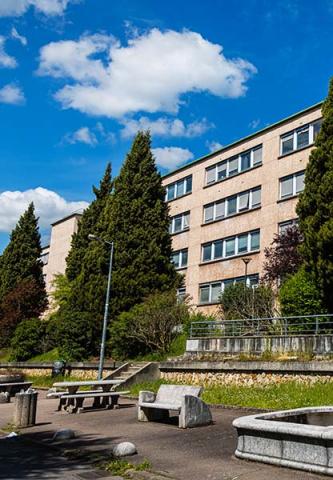
Orsay Bures
